
Look, I'll be honest with you. Not entirely sure when domain extensions became this… complicated. .com used to be it, right? You wanted a website, you grabbed a .com, and boom – done. But here we are in 2026, and suddenly there's like a million different endings you can slap on your web address, and honestly? Some of them are kinda genius.
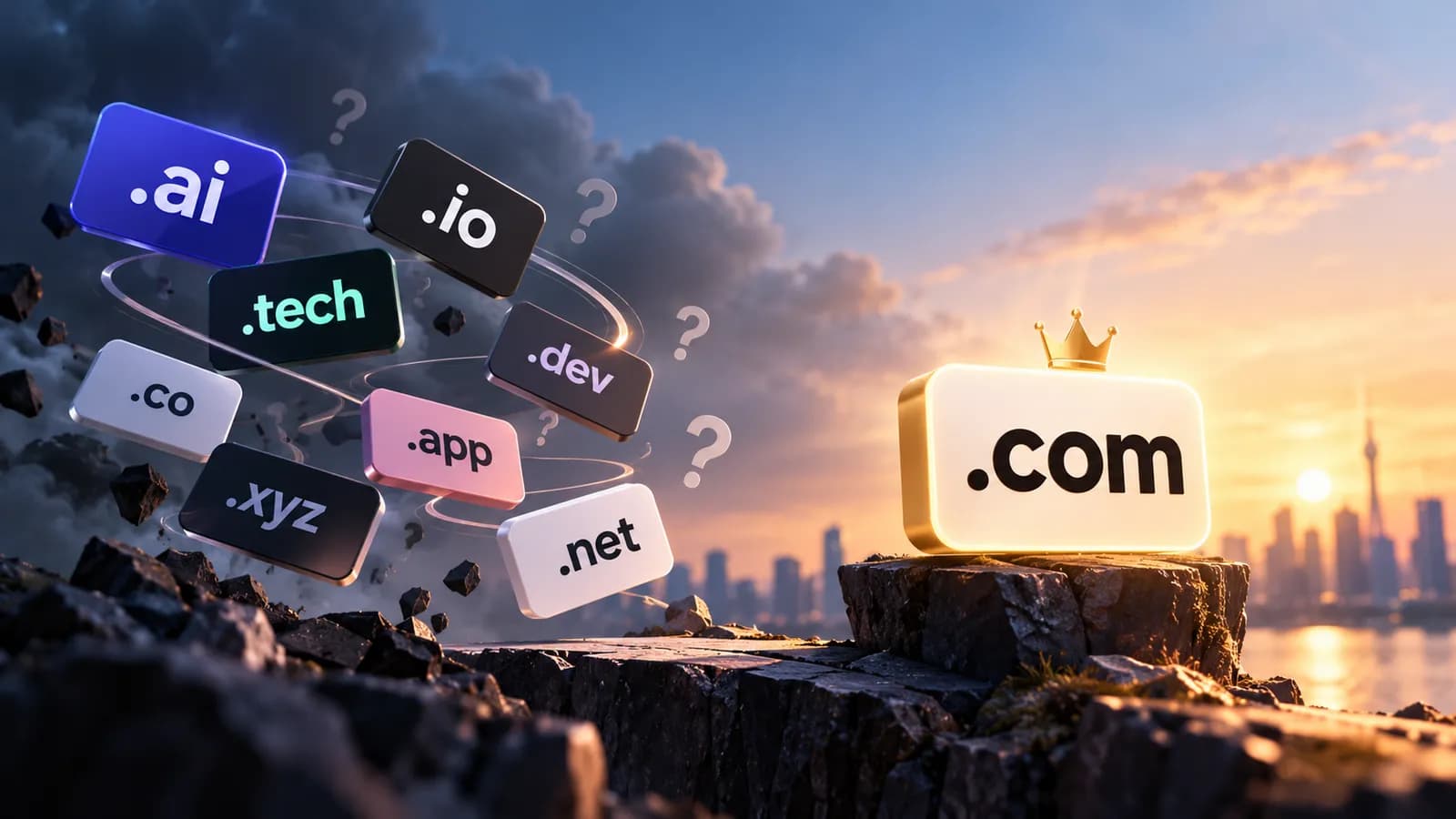
So what even is a gTLD?
That bit at the end of a website address (.com, .net, whatever) is called a Top-Level Domain. gTLDs – generic TLDs – are basically the new kids on the block (well, since 2013, so not that new anymore, but you get it). Here's what gets me excited about them:
Why people are actually using them
Availability
The big one, no question. Try finding a decent .com these days that isn’t already squatted on by some domain hoarder asking $50K. It’s brutal out there. But with gTLDs? You’ve got options. Real ones.
They say what you do
Someone sees “yourcompany.ai” and they immediately know you’re in the AI space. That’s free marketing, essentially. Your domain’s doing half the branding work before anyone even clicks.
The price point
Some premium ones cost a fortune now, but standard gTLD registrations are usually ten to fifty bucks a year. Compare that to premium .coms that go for six figures and suddenly that .tech domain looks pretty reasonable.
But hold up: the downsides are real
Trust issues
That’s the elephant in the room. My mom (and probably yours too) still thinks anything that’s not .com is sketchy – it’s decades of conditioning. Older users especially might see an unfamiliar extension and just… bounce, and some gTLDs see lower click-through rates.
SEO catch-up
Google says it treats all TLDs the same. Do I buy that completely? Eh, maybe 70%. .com domains have had literal decades to build authority and backlinks. Starting fresh with a gTLD means you’re playing catch-up, at least initially.
Memorability
Tell someone your site is “example.tech” and half of them will type “example.com” next week. It’s muscle memory – and it can send traffic straight to a competitor, or a squatter who bought the .com just to mess with you.
The money plot twist
Here's what nobody tells you upfront: the aftermarket for premium gTLDs has gotten insane. We're talking five, six figures for the good ones now. So while registering a random .tech might be cheap, getting that perfect one-word .ai domain? That'll cost you.
Big money's poured into this space, which is different from previous domain bubbles. This isn't speculation, it's actual utility. When a startup grabs a .ai domain, they're making a statement about who they are and where they're going.
Should you jump in?
Depends what you're building, honestly.
Tech, AI and digital products
gTLDs make sense. They’re on-brand, available, and increasingly accepted. Just grab the .com version too if you can, even if you don’t use it – defensive registration isn’t paranoia, it’s smart business.
Traditional and local businesses
I’d still lean toward .com if possible. The recognition factor matters, especially with older demographics.
Quick tip (because I wish someone had told me this)
When hunting for gTLDs, think short and punchy. Verbs work great. Nouns too. The extension itself is already doing descriptive work, so you can afford to be creative with what comes before the dot. Two-syllable combos stick in people's heads way better than you'd think.
Bottom line: domain strategy isn't one-size-fits-all anymore. You've actually got choices worth considering beyond just settling for whatever .com is available. Whether that's liberation or just more decision fatigue… well, that's up to you.
Ready to look? The AI domain name generator suggests names across .com, .ai, .io and more, or check a name you already have in mind with the domain availability checker.